Authentic Dating Profile Blueprint: Photos, Prompts, Openers
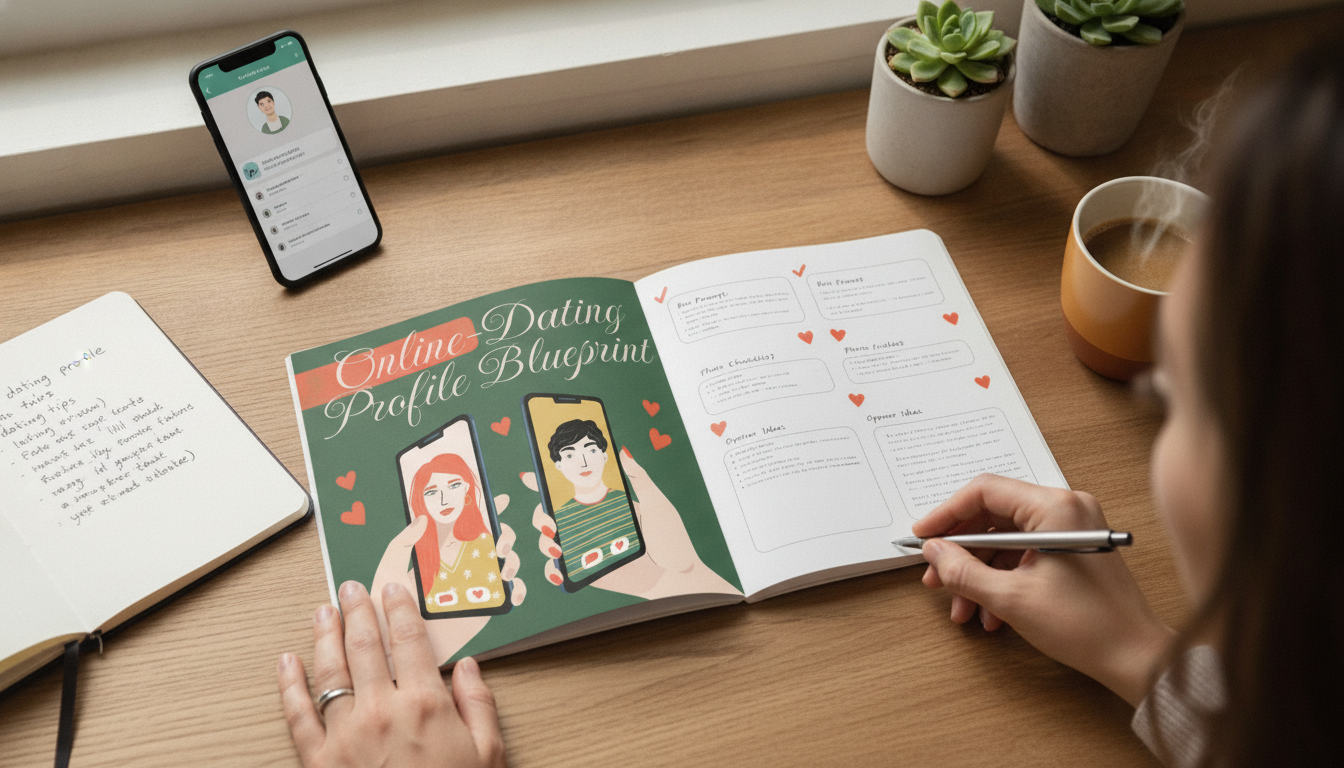
Online-Dating Profile Blueprint: How to Build an Authentic Profile, Strong Openers, and Better Matches
Dating apps move fast, but the profiles that perform best don’t rely on gimmicks. They make it easy for the right people to recognize you, understand your vibe, and start a real conversation. The goal isn’t to share everything—it’s to share the right things with clarity, warmth, and enough “hooks” that someone can message you without guessing.
If you want a practical, print-and-use process, the Online-Dating Profile Blueprint (printable guide) turns “not sure what to say” into a repeatable system you can refresh in minutes.
What “authentic” looks like on dating apps
Authentic profiles are specific. Instead of “I love to laugh,” they show real preferences and routines: the kind of weekend you actually enjoy, the foods you always order, the type of plans that feel fun (not draining), and the values that shape your choices.
Clarity tends to beat intensity. A calm, concrete profile usually attracts better-fit matches than exaggerated jokes, aggressive banter, or “no drama” warnings. The more your profile reads like a stable person with a real life, the easier it is for a good match to picture themselves in that life.
Authenticity still includes strategy. You’re not writing a diary—you’re making it easy to respond. The best profiles reduce friction by offering multiple conversation hooks: a place you love, a niche interest, a playful preference, or a small opinion someone can reply to without pressure.
Profile foundations: define your “match lane” before writing anything
Before you rewrite a single prompt, decide what you’re signaling. Think of this as your “match lane”—the vibe you want to attract and the pace you want to keep.
- Pick your vibe and keep it consistent: playful, serious, slow-burn, adventurous, or homebody-with-hobbies. Your photos and prompts should match the same story.
- Choose 3 non-negotiables and 3 nice-to-haves: you don’t need to list them like rules. Instead, filter your content so the right people naturally feel aligned.
- Identify 2–3 conversation magnets: a weekend ritual, a niche interest, a goal for the year, or a strong (friendly) opinion.
- Rewrite negatives into positives: “No flakes” becomes “I’m into making a plan and actually following through.”
If you want to work through this quickly, the Online-Dating Profile Blueprint is designed to help you choose your lane, pick hooks, and keep your profile coherent across apps.
Photos that create trust and chemistry (without trying too hard)
Photos do two jobs at once: they help someone recognize you and they help them feel comfortable starting a conversation. When photos are confusing—heavy filters, sunglasses in every shot, blurry angles—people hesitate. Clear, natural photos reduce uncertainty and increase replies.
For extra context on why clarity matters in recognizing faces, research on face recognition performance consistently shows that image quality and unobstructed features improve identification—another reason to avoid heavy filters and covered faces (see NIST’s Face Recognition Vendor Test).
Quick photo set blueprint (aim for 4–6 photos)
| Photo slot | Purpose | Simple examples |
|---|---|---|
| 1. Clear face photo | Immediate recognition and warmth | Window-light selfie; outdoor portrait |
| 2. Full-body casual | Comfort and transparency | Standing shot on a walk; casual outfit |
| 3. Lifestyle/activity | Compatibility signal | Cooking, hiking, museum, gym class |
| 4. Social proof | Shows community and vibe | One group photo where you’re centered |
| 5. “Story” photo | Adds personality and hooks | Travel moment, pet, creative hobby |
Bio and prompts: write for replies, not applause
First messages that actually start conversations
Message templates to personalize in under a minute
Keep a small “message bank” you can customize quickly. If you want to turn this into a routine, the Online-Dating Profile Blueprint is built for print-and-repeat use.
How to spot better matches (and avoid time-wasters) early
- Effort symmetry: they reply consistently, ask questions back, and engage with specifics.
- Trust patterns over bursts: reliability in messaging often predicts reliability in dating.
- Move toward a plan: if messaging feels good, suggest a short call or low-stakes first date sooner rather than letting it drag.
- Notice red flags: dodging basic questions, pushing off-app immediately, inconsistent stories, or intense escalation too fast.
- Keep safety basics: meet in public, tell a friend, and protect sensitive details early. The FTC’s guide on romance scams is worth reviewing if you’ve never skimmed it.
For a broader snapshot of how people experience online dating (the benefits and common frustrations), Pew Research provides helpful context in The Virtues and Downsides of Online Dating.
Printable workflow: a repeatable weekly refresh in 20–30 minutes
Recommended downloads (in stock)
- Online-Dating Profile Blueprint | Printable Guide to Authentic Dating Profiles, First Messages, and Better Matches
- One Bag, Two Weeks, Zero Stress – How to Pack a Carry On for Two Weeks
FAQ
How many photos should a dating profile have?
Aim for 4–6 photos: a clear face photo, a full-body casual shot, a lifestyle/activity photo, one “social proof” photo, and one personality/story photo. Too few can raise uncertainty, while too many can dilute the story and make it harder to remember you.
What should a first message say if someone’s profile gives almost nothing to work with?
Use a respectful fallback: mention the vibe of one photo, share a small related detail about yourself, then ask an easy either/or question. Keeping it light and specific makes it simpler for them to respond and reveals whether they’ll meet your effort.
How often should a dating profile be updated?
A light refresh every 2–4 weeks works well, or anytime your look changes with seasons, hair, or a new trip/activity photo. Change one element at a time so you can tell what improved your match quality and conversations.












Leave a comment